 Comparing scalability, ownership, performance, and architecture between custom software engineering and low-code platforms.
custom full-stack web development vs low-Code builders is the ultimate architectural dilemma tech founders must evaluate when launching scalable applications in 2026. The brutal truth about startup infrastructure is that choosing the wrong technical stack early on can lead to catastrophic performance bottlenecks, vendor lock-in, and expensive rewrites. Official software engineering standards maintained by top digital agencies emphasize that robust backend foundations determine whether a digital product scales smoothly under heavy user loads.
Whether you are building a disruptive SaaS platform or a complex enterprise dashboard, selecting the proper development pathway protects your valuation and data security. When reviewing custom full-stack web development solutions against drag-and-drop builders, understanding your long-term roadmap allows you to build sustainable tech assets. Just like partnering with an expert digital agency like CyberForges for professional software engineering and cloud infrastructure, aligning your technology stack with your growth targets guarantees absolute market readiness.
1. What Is Custom Full-Stack Web Development?
Custom full-stack web development involves building applications from scratch using robust programming languages, frameworks, and databases tailored precisely to unique business specifications.
By utilizing modern architectures like Next.js, Python FastAPI, Laravel, and PostgreSQL, developers maintain complete ownership over every line of code. This flexibility allows startups to implement complex algorithms, custom integrations, and infinite scalability without platform limitations.
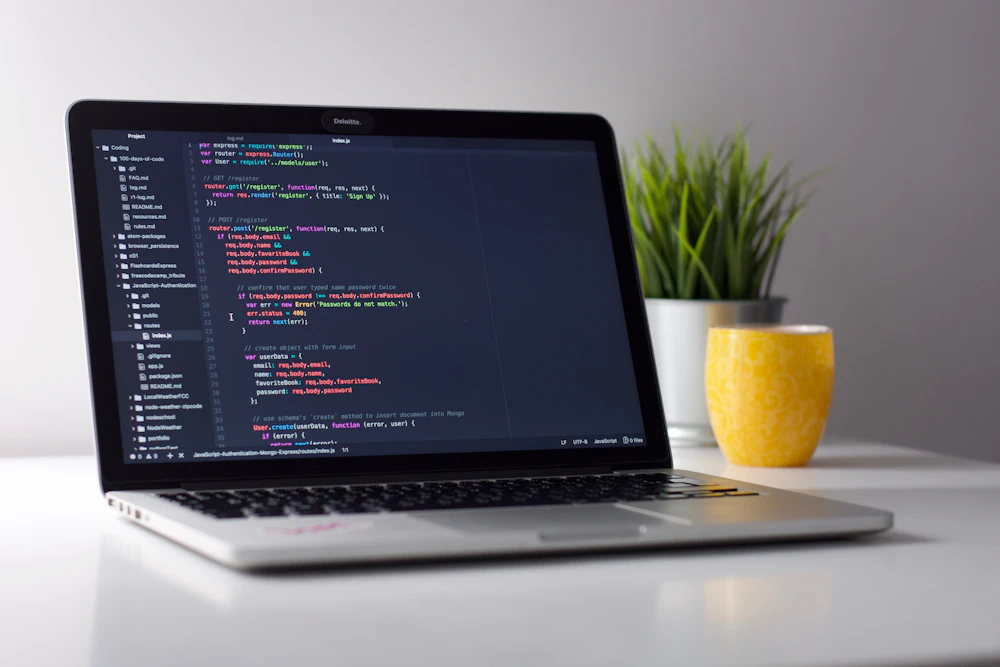 Writing clean, scalable code for high-performance web applications and backend database management.
2. What Are Low-Code and No-Code Builders?
Low-code and visual builders provide drag-and-drop interfaces that enable non-technical founders to prototype and launch basic web applications quickly with minimal manual coding.
While these tools offer rapid initial deployment for simple landing pages or MVPs, they often introduce severe limitations regarding custom database logic, heavy frontend rendering, and monthly subscription overhead.
3. Custom Full-Stack vs Low-Code: Top 3 Core Differences
To figure out what your startup requires, evaluate these core operational differences when examining architectural approaches:
- Scalability and Performance: Custom full-stack applications handle millions of requests with optimized queries and microservices. Low-code builders often slow down as database records multiply and complex workflows expand.
- Data Ownership and Security: Custom development grants you 100% ownership of your source code and database server security. Low-code platforms keep your application locked inside proprietary ecosystems.
- Long-Term Flexibility: Custom code adapts to any third-party API or business pivot instantly. Low-code tools restrict your features to predefined plugins and native templates.
💡 Startup Architecture Strategic Advice
Choose low-code builders strictly for quick concept validation or internal MVPs. Choose custom full-stack web development if you are building a scalable digital product designed to secure investor funding and handle enterprise-grade traffic.
4. Which Development Path Should Your Startup Choose in 2026?
Your migration roadmap when evaluating technical strategies should align with your business model:
- Choose Low-Code If: You are testing a simple idea with zero budget and need a basic prototype in days without software engineers.
- Choose Custom Full-Stack Development If: You are launching a serious tech venture requiring custom user logic, absolute data security, high-speed performance, and infinite scalability.
Summary: Professional Web Engineering Solutions
Whether you need expert full-stack web development, secure cloud hosting, or professional SEO optimization, technical execution matters. CyberForges delivers enterprise-grade software architecture and robust digital engineering tailored to your exact business growth targets.
Ready to Build a Scalable Web Application for Your Startup?
Let our full-stack engineering experts architect custom solutions, secure your database infrastructure, and accelerate your time to market.